September 18, 2013

New Season, New Color for Containers

Nothing says "fall" like mums!
Annuals are great for providing color all summer long—they’re really the workhorses of the plant world. But as with anything, annuals have their season, and if the flowers on your patio or deck are looking worn and you’re ready for something new, consider a few great options that will give your pots color for the rest of autumn—and even all winter long.

The quintessential fall flower has to be the chrysanthemum. Mums are great for fall color; they’re available in just about every color of the rainbow, need very little maintenance, and can be planted out in your yard after they’re done blooming for you to enjoy next year. When shopping for mums, avoid the temptation to buy them in full bloom. Mums only bloom once a year, and while their blooms last a long time, you’ll enjoy the flowers much longer if you buy plants just starting to show color.

'Violet Wing' Cool Wave pansy
A second must-have flower for fall is the classic winter pansy, but this year, there’s a new twist on the old standby: a cold-hardy trailing version! Initially debuted last fall, Cool Wave pansies are an aggressive trailing variety that spread or trail to two feet or more and are hardy to -20 degrees Fahrenheit. They need no deadheading and minimal watering once regular rains arrive, so they’re as low-maintenance as you’ll find. Last fall, I planted some in hanging baskets to try for the winter; starting in September, they bloomed until mid-June this year—and they might have gone longer if I wasn’t simply tired of looking at them!

Cool Wave pansies in hanging baskets or individual pots are now available at Vander Giessen's—they prefer cooler weather, so they’re usually a couple of weeks later than the first mums you’ll see out for fall.

A third broader category for fall planting is what I’ll call “foliage.” Most ornamental grasses are just coming into their peak season and many make great container plants. ‘Burgundy Bunny’ fountain grass is a nice dwarf variety with red-tinged blades; its soft, fluffy seed heads are reminiscent of a bunny tail. This variety is a perennial that can be planted out in your flowerbeds either this fall or next spring when you’re ready to plant your summer annuals.

One tender but certainly more striking grass is ‘Fireworks’ fountain grass. Hardy only to 20 degrees, it may not overwinter, but it’s certainly worth planting for its glorious fall color. Like ‘Burgundy Bunny,’ it displays showy seed heads this time of year. Most striking, though, is its fluorescent pink-, purple- and white-striped blades.

'Fireworks' fountain grass with heather
If grasses aren’t your thing, consider another tender perennial that’s new this year: ‘Inferno’
coprosma. Commonly called “mirror plant,” its super-glossy leaves look almost artificial. With splashes of color in shades of red, yellow, white and green, the foliage of ‘Inferno’ will coordinate well with almost any fall container planting. Keep in mind, though, that like ‘Fireworks’ fountain grass, coprosma may not overwinter should temperatures dip into the teens. Of course, these plants will survive if given sufficient protection from cold; shelter them on a south-facing front porch or in a garage during a cold snap and enjoy them in the garden all next year!

September is a season of transitions, and if you’re tired of looking at your weary summer annuals, give your pots a fresh burst of color for fall and winter. With an hour of planting and minimal watering or deadheading, you can have beautiful containers or hanging baskets to brighten up your porch for months to come!

September 16, 2013

Great Selection of Fall Flowers

If your summer flowers are looking tired--or you're just bored with what you have--check out the great selection of fresh fall flowers available now at the nursery!

Pansies, mums, ornamental cabbage and kale, fall grasses, fall-blooming heathers--even mum baskets and trailing winter pansy baskets--there's plenty of great color to take home for the fall and winter months. See you soon!

Fall Clearance Sale!

For you bargain hunters, it's time to get in the car and head over to Vander Giessen's--our fall clearance sale has begun! Right now, nearly our entire selection of trees, shrubs and perennials is on sale at 25% off. The only plants you'll find right now that aren't on sale are our fresh stock of 'Emerald Green' arborvitae and fall flowers.

Our sale is limited to stock on hand, and supply of many varieties of plants is limited, so stop in soon before the plants on your shopping list are gone. Remember, fall is the best time of year to plant--and with 25% off, your planting dollars will go even further toward giving you the garden you've been wanting. Enjoy the changing season and pick up some plants for your yard today!

September 5, 2013

Rhododendrons on Sale!

'Hotei' Rhododendron--a true yellow!
Rhododendrons are an easy-to-grow, colorful shrub for gardens in our corner of the northwest. They grow so well and are so pretty they're even our Washington state flower! Right now, our entire selection of "rhodies" is on sale at 30% off--and with 19 varieties on hand, there's sure to be one that fits your taste.

From dwarf varieties that top out less than two feet tall to larger plants that reach five or six feet; from solid green leaves to variegated leaves to red-toned foliage; from pink to purple to white to red to yellow--yes, even yellow--flowers there's bound to be a rhododendron that screams "take me home!"

Plant a rhododendron or two in your yard this fall and you'll have a well-established plant in time for blooming next spring.Supply on many of the more unique varieties is limited, so stop in soon to take advantage of this great savings.

August 21, 2013

Great Late-Summer Color!

Just because it's late summer doesn't mean you can't have fresh plants. We continue to receive regular deliveries of fresh perennials and shrubs for late summer and fall--check out some of the great color available now!


Beware Downy Mildew on Impatiens

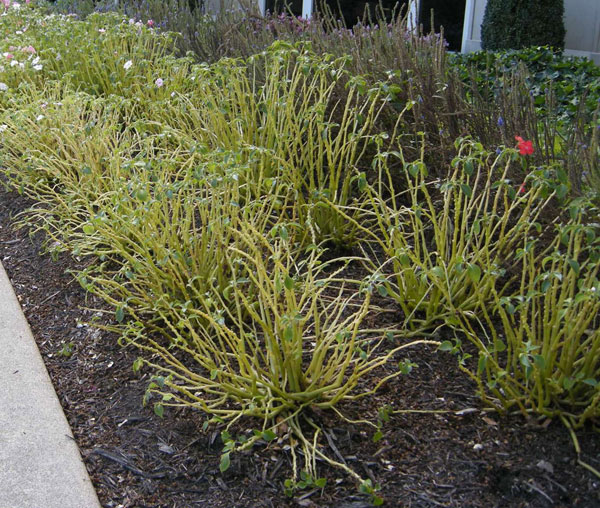
I hate to even have to report this, but it appears that an ugly disease that has spent the last couple of years spreading westward across the country has reached the Pacific Northwest. It's called impatiens downy mildew, and it's quickly becoming the worst enemy of gardeners who love to grow impatiens. If you've struggled with growing impatiens this summer--or just want to be aware of what to watch for--here's the scoop on impatiens downy mildew.

First off, the symptoms (courtesy Michelle Grabowski, UMN Extension Educator). Typical symptoms that impatiens display may include the following:
Advanced symptoms of downy mildew.
Courtesy M.A. Hansen
  • Leaves first appear light yellow or stippled yellow & green.
  • Leaf edges curl downward; leaves appear wilted.
  • Fluffy white growth occurs on the lower surface of leaves.
  • Blossoms drop first. Next leaves fall off leaving bare green stems. Finally stems collapse and lay flat on the ground.
  • Plants infected young are stunted and have small leaves.
  • In very wet conditions, infected plant tissue becomes water soaked, soft and mushy.
Now, how does it spread? Downy mildew can spread any number of ways. It may come in on your new plants at the time of purchase. (At Vander Giessen's, we were very proactive this year, inspecting our impatiens 3-4 times per week for any symptoms of the disease. Thankfully, we never saw any symptoms.) It may also spread by spore-like structures through watering or via air currents.

Arguably, the worst aspect of impatiens downy mildew problem is its longevity. Because it's a relatively new disease to the U.S., little is known about how long the disease can last in infected soil. However, a very similar strain of the disease has been shown to last up to 10 years in contaminated soil, so impatiens downy mildew may have similar impacts.

As for treatment, unfortunately at this point there are no products that can cure the disease and little that gardeners can do to prevent it. If you discover downy mildew in your impatiens, remove the diseased plants and any fallen leaves or flowers, seal them in a plastic bag and dispose of them in your garbage. Don't risk spreading the disease by throwing your plants in a compost pile.

To avoid problems in your garden, be as proactive as possible! Impatiens downy mildew tends to be most active in wet, humid conditions, so to prevent making conditions right for the disease to thrive, water impatiens early in the morning and avoid getting the foliage wet if possible. Regularly check your plants for any symptoms of the disease and take quick action to dispose any suspect plants. 


New Guinea impatiens are a great disease-resistant
alternative for shade gardens.
All traditional varieties of impatiens (impatiens walleriana) are susceptible to downy mildew; however, New Guinea impatiens (impatiens hawkeri) have shown themselves to be highly resistant to the disease, so if you're a diehard impatiens lover, consider upgrading to the showier, larger-flowered cousin of this garden favorite. You can also consider other shade-loving and downy mildew-resistant plants like coleus or begonias for your flowerbeds.

Unfortunately, impatiens downy mildew is becoming a reality for gardeners now nationwide. While scientists work to develop a solution to the deadly disease, you can arm yourself with the knowledge of what you may be up against and the steps you can take to deal with it should it strike your garden.

August 20, 2013

Hydrangeas: When to Prune and How to Change Their Color

Macrophylla hydrangea--the most common type!
It's late summer, and despite all the other fun activities you’re trying to squeeze in before fall, now is the time to prune many varieties of hydrangeas around your yard. If you’ve ever struggled with getting your hydrangeas to bloom right—or even if you want to change the color of your blooms—here are some basic tips that can make your bushes look their best.

Hydrangeas come in many shapes, sizes and varieties, but for the most part, you’ll find four different types in garden centers and around your neighborhood—and knowing which type you have will determine when and how to prune.

First, macrophylla hydrangeas are the most common types. Whether you have the standard mophead (large, round flowers) or lacecap (very small blossoms surrounded by a ring of larger blooms on each flower head), prune them now! Macrophylla hydrangeas typically only bloom on old wood, meaning if you wait until next spring to prune your shrubs back, all the new growth they put out after their haircut will be nothing but leaves. Traditional mopheads and lacecaps should be pruned just as the blooms fade in summer so they have time yet before fall to develop flower buds for next year.

Paniculata hydrangea
The second most common hydrangea species is the paniculata family. You might know some of the common varieties like ‘Limelight,’ ‘Pee Gee’ or the newer ‘Bombshell,’ all of which are easily distinguishable by their cone-shaped flowers. Unlike macrophylla types, paniculatas can be pruned anytime between late summer and mid-spring, and may not even need regular pruning at all.

 A third common hydrangea species for our area is the arborescens type.  The most common of these varieties is ‘Annabelle,’ a white variety with large blooms, although others like ‘Invincibelle Spirit’—a  pink variety—are common, too. Like paniculatas, these hydrangeas can be pruned at any time other than late spring or summer.

The last main variety of hydrangea you’re likely to grow is quercifolia, more commonly known as oakleaf hydrangeas. They have cone-shaped flowers similar to paniculata types, but their leaf shape mimics that of an oak tree. Like macrophylla types, oakleaf hydrangeas should be pruned in late summer in order for them to bloom reliably the following year.

Now that you know the basic types of hydrangeas and when to prune each, let me offer this caveat: many of the new introductions in the last several years can be pruned just about any time of year, regardless of which species they are. So, if you’re in the market for a new hydrangea and want to keep things simple, ask at a garden center for some of the newer varieties! 

Finally, how can you change the color of your hydrangeas? In the Pacific Northwest, the acidity of our soil naturally turns macrophylla types blue over time. If you want to turn a hydrangea pink—or keep one that way—treat it with Bailey’s Color Me Pink™, a soil additive available at Vander Giessen's. Likewise, if you wish to intensify the shade of blue in your hydrangea, use Bailey’s Color Me Blue™.  Depending on your conditions and desired color, multiple applications of either product may be needed. For better or worse, the color of white varieties cannot be changed.

Hydrangeas are beautiful shrubs and easy to grow. With a little attention to what type you have in your yard, you can enjoy loads of flowers each year while also maintaining the size of your plants. And with a little extra care, you can even change the color of your blooms to suit your taste!