June 29, 2015

Greenhouse Clearance Sale on Now

Planting season for flowers is wrapping up, and as you put the finishing touches on your garden for the summer, we're throwing a sale! Through Friday July 3, all of our bedding plants and basket stuffers are 50% off!

Additionally, we've marked our gorgeous hanging baskets down as well--now just $29.99 each. These beautiful baskets rarely go on sale, so take advantage of this deal and add some color to your porch just in time for your Fourth of July barbecue. With color until the first frost--typically late October--there's a lot of enjoyment left in store for these baskets.

This sale ends on Friday, so don't wait--stop in soon and pick up the flowers you need today!

June 24, 2015

Tips for a Better Summer Garden


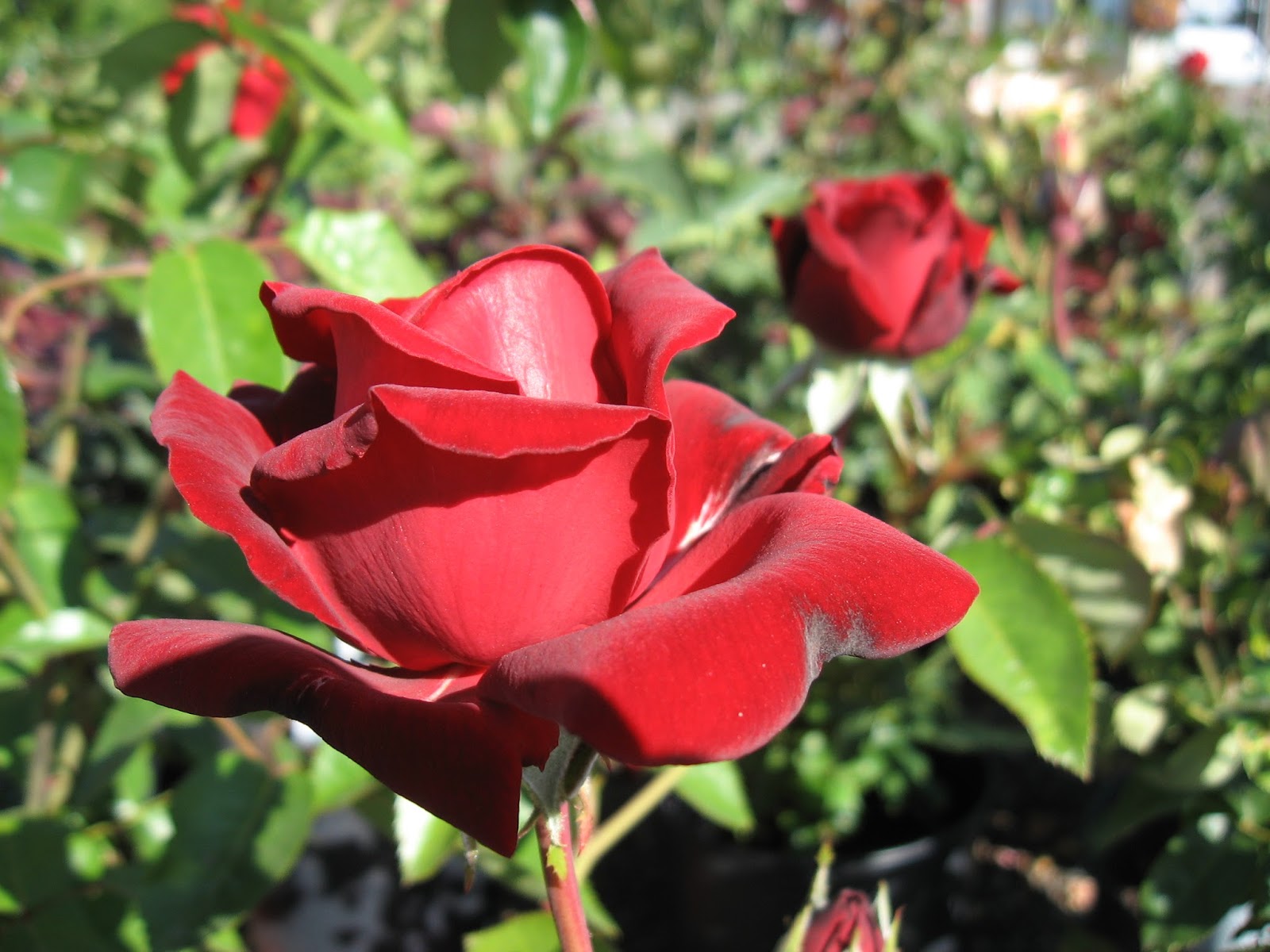
'Ingrid Bergman' hybrid tea rose--one of the best reds!

It’s June, and although the warm, dry weather feels more like late July, summer is only just begun. By now, your garden is likely planted, your flowers are growing and you’re beginning to see the fruits of your labors as plants do what they do best: look beautiful! With the new season upon us, here are a few tips to keeping your garden looking its best and a couple of plants sure to give you added color throughout the coming months.

Rose bushes are one of the most beautiful shrubs you can choose for your garden. With summer-long color, powerful fragrances, and the romance of a fresh-cut bouquet, they’re unmatched in beauty. But like all treasures, roses come at a price—insects love them and diseases like black spot and powdery mildew are ever-present foes. 

Minimize the cost of beautiful roses this summer by applying Bayer Rose & Flower Care now and every six weeks through the growing season. This liquid systemic fertilizer, insecticide, and disease control is a superior no-spray product that will take the effort out of growing roses and give you healthy, productive plants all season long. 

As we get into summer, routines change, but as far as your yard is concerned, it’s business as usual—and I’m guessing your lawn might be hungry by now. Chances are, a couple of months ago, you fed the lawn for spring and enjoyed a nice green-up. But now, as we get into summer, it’s important to feed once again. Remember, Scotts Turf Builder with Moss Control is a great fertilizer for greening up the lawn without encouraging too much growth (read: mowing!). Or, if your lawn would benefit from added nitrogen, Scotts Turf Builder will satisfy your lawn’s hunger with the additional benefit of micronutrients not found in generic lawn fertilizers. 

If your lawn is patchy or thin in spots, now is also a great time to overseed those areas. Rake through the bare or thin areas to gently loosen the soil, then spread some grass seed and starter fertilizer and cover with a light layer of crumbled peat moss. Keep it watered regularly to encourage germination—with our warm soil temperatures, you should see seeds sprouting in about a week.   

Now, maybe you’re still in planting mode—sure, spring was early this year, but that doesn’t mean it’s too late to plant! If you’re still looking to fill some planters or add a splash or two of color around the yard, there are plenty of options. One flower you simply can’t go wrong with is the trusty geranium. But just because it’s a dependable, old stand-by, doesn’t mean it can’t be exciting.

'Tango Orange' geraniums in mass planting
with marigolds at the nursery
Two of my favorite varieties I’ve come across over the last several years are sure to provide color and interest in your garden. ‘Tango Orange’ is about as true an orange as you’ll find in geraniums—a beautiful shade that will have your neighbors talking. ‘Calliope Dark Red’ has large, deep crimson flowers and a semi-trailing growing habit, making it a great modern replacement for messy, old-fashioned ivy geraniums. 

Another flower great for filling those last spaces in the garden is calibrachoa. Now, you’ve seen this plant used in hanging baskets and planters for years, but have you ever tried it in the garden? As a garden plant, calibrachoa (also known as ‘million bells’) makes a nice groundcover, each plant spreading out to about 18 inches. 

Finally, enjoy. Gardening is meant to be fun, and if you make it all about work, you’ve missed the point. Take some time each week to simply admire. Your garden is a beautiful place; don’t miss out!

June 17, 2015

All Roses on Sale!

'Ebb Tide' Rose
We love roses--they're one of our favorite plants for color, fragrance and class both in the garden as as a fresh bouquet in the home. And right now, they're all on sale! Whether you're starting your first rose garden or adding on to an established planting of roses, we have a great selection of rose bushes to choose from.

For a limited time, our entire selection of roses is on sale at Buy 3, Get 1 FREE! Stop in soon for the best selection; for a complete list of the rose varieties we carry, visit our website. Please note that the list of varieties we carry may not reflect current availability--once this sale starts, many varieties sell out fast!

For all your roses, we recommend treating every six weeks with Bayer Advanced Rose & Flower Care. This all-in-one systemic eliminates the need to spray your roses; in one easy-to-use application it provides fertilizer, disease prevention and protection from insect problems. Get $10 back on your purchase of Bayer Advanced Rose & Flower Care with a mail-in rebate available at Vander Giessen's.

Summer is upon us, and nothing says summer like a fresh bouquet of roses on the kitchen table. Enjoy a rose bush--or four--in your garden for years to come and take advantage of our sale today!

May 20, 2015

Unique Annuals For Summer Color


As a gardener, I’m always looking for new and exciting plants. And I know I’m not alone—many gardeners I meet are constantly on the lookout for what’s different and exciting. With spring now well underway and the planting season for flowers upon us, here are a few of my favorite unique annuals to enjoy all summer long.

'Orange A-Peel' Thunbergia Black-Eyed Susan Vine
Photo courtesy Proven Winners
The first of my favorite plants is a climber, ideal for pots situated in front of a post or trellis. Thunbergia, commonly referred to as black-eyed susan vine, is a gorgeous climbing annual that no garden should be without. Having grown it on my own patio, I’ve seen how this vine grows vigorously and blooms heavily all summer long and well into fall. Last year, even after the rest of the plants in my pots started looking tired, my black-eyed susan vines were continuing to look great—and that was in early November! 

Most commonly found with bright yellow or orange blooms, thunbergia’s only resemblance to a black-eyed susan is its color; the flowers themselves actually look more like a petunia. With no deadheading needed and a six-month blooming season, black-eyed susan vine deserves a spot in your containers.

My second favorite annual is an entire species rather a single plant. With so many new introductions over the last five years, it’s hard to pick a favorite, but if you haven’t looked at coleus lately, look again. Traditionally considered a shade-lover, today’s varieties of coleus are much more versatile, with many varieties now well-suited for sun or shade. 

Depending on the variety you choose, coleus may grow as tall as four feet, so choose a plant that will fit with the size of your container. Available in shades of pink, orange, green, yellow, red and near-black, coleus works well with any color scheme and can provide a much-needed neutral backdrop for the other flowers in your pots or beds. Check out the many varieties of coleus available now at Vander Giessen's.

Lanai 'Twister Purple' trailing verbena--great for containers!
Photo courtesy Proven Winners
The third new plant I’m excited about is (I realize I’m cheating) actually two relatively new types of verbena, namely ‘Twister Red’ and ‘Twister Purple.’ Trailing verbena is a great ingredient for any mixed container of flowers, and the ‘Twister’ varieties are no exception. Both varieties boast two-tone flowers, the center of each flower head being a rich shade of red or purple and the outer ring of flowers tones of pale pink or lavender, respectively. On their own, ‘Twister’ verbenas are dramatic, but combined with other flowers, they really shine. 

For all of these flowers and the rest of the annuals and hanging baskets you plant (or received for Mother’s Day!), they’ll bloom all summer long and well into fall, but only with proper care. In order to look their best, water your pots and baskets daily until water starts to drip out the bottom of the pot. If you miss a day or discover your pots wilted and overly dry, water twice with a five minute break between watering to allow the soil to start to swell and soak up water once again. 

Annuals are hungry plants, so don’t forget to fertilize once a week with a high-quality water-soluble fertilizer like Jack’s Classic. This time of year, it’s most important to provide a balanced blend of nutrients such as Jack's All Purpose 20-20-20 mix, but you’ll achieve the best results by alternating with Jack's Blossom Booster 10-30-20 blend. This combination of fertilizers will keep your plants growing strong and keep flowers blooming even through cool, wet June days and the heat of July and August. 

As you spend more time outside this spring and get underway with planting flowers, we invite you to stop in and check out the sea of summer-long color available now in our greenhouses. Oh, and don’t be afraid to try something new; who knows—you might find a new must-have flower for your garden!

April 23, 2015

Trust Me, It's Not Crabgrass

Poa annua, or annual bluegrass, appears bright green
with a white seed head
Think you have crabgrass in your lawn? Let me be blunt: you're wrong. Here in the Pacific
Northwest, crabgrass is rarely a significant problem in lawns; in fact, even when it is you won't notice it showing up until summer heat sets in. The fact is, if you think you have crabgrass in your lawn during the cooler spring months, it's not crabgrass at all. It's poa.

Somewhere back in lawn care history, someone thought they'd sound smart if they walked into a nursery and asked for a weed killer that would take care of crabgrass in their lawn. It's the gardening equivalent of walking into your doctor's office with the wealth of knowledge you found on WebMD. You'll sound smart, but the diagnosis is way off.

Don't fault yourself, though--for better or worse, the term "crabgrass" has come to be used among gardeners today to describe a broad range of grassy weeds. The fact of the matter is, however, that the grassy weed you're probably fighting in March, April and May is a different beast altogether, and it's called poa annua, or annual bluegrass.

Poa is a cool-season grass, meaning it typically goes dormant during the heat of summer. This time of year, though, it's rampant in spreading through our lawns. You'll notice poa by the lighter green color of its foliage, a slightly broader blade than typical lawn grass, and a bright white seed head that appears while the grass is still short.

It's that aspect--a seed head at a very low height--that allows poa to spread so readily. Even mowing your grass short will often miss most of the seed heads, and it regenerates so quickly that it will often go to seed just a few days after mowing.

So, now that you know it's not crabgrass, what steps can you take to eliminate it from your lawn? Sadly, to date there's no total cure; since poa is so genetically similar to lawn grasses, most weed killers that outright kill poa would also kill your lawn.

The best method to eradicate poa is prevention. Since poa is considered an annual grass, it won't be a permanent part of your lawn (typically, a poa "plant" only lasts for a year or two before dying). If you can break the life cycle of it reseeding itself, you'll have a good chance of eventually eliminating it from the lawn.

At Vander Giessen's, we've found a couple of very good pre-emergent (preventative) weed killers that are effective in prevention. Both Scotts Halts Crabgrass Preventer and Bonide Crabgrass & Weed Preventer are effective in prevention of poa (I know, they both have crabgrass in the name, but we're still talking poa!). Apply either of these granular products to your lawn in spring and fall to cover the cooler growing season.

A new product that Bonide has just introduced shows a lot of promise in preventing poa from growing, and it offers some help in killing young poa plants in your lawn. Bonide Crabgrass Plus is both a pre-emergent (meaning it kills weed seeds before they sprout) and post-emergent weed killer, but only for young plants. Keep in mind that this product will not kill larger, established areas of poa, but it will prevent it from spreading and kill recently-sprouted patches of poa. If you choose to use Crabgrass Plus, you don't need to use either of the others I've mentioned.

Next time you're ready to get advice on how to deal with the weeds in your lawn, be bold in asking for help, because now you know at least one of the weeds you're dealing with...and trust me, it's not crabgrass!

April 22, 2015

Four Tips for a Better Vegetable Garden


Shady areas in the garden? Plant lettuces
and spinach and watch them thrive!
With this year’s mild winter, our gardening season in the Pacific Northwest has gotten off to a much earlier start than normal. From lawns that needed a good mowing weeks ago to fields of tulips in bloom well before the height of the Skagit Valley Tulip Festival, signs of an early spring have been plentiful. As you prepare to plant your vegetable garden this year, here are four tips for a more productive, rewarding garden.

1. Give each plant in your garden the sun exposure it needs. Now, with adequate water, most vegetables will produce best in full sun. The breadbasket of California’s Central Valley wasn’t born from its abundance of shade! However, if your garden space doesn’t have full sun, understand that plants grown for their roots or fruits need sun; those grown for their leaves will do well even in some shade. So, as you decide what to plant where, keep your peppers, tomatoes, beans and carrots in the sun and let the lettuce and spinach grow in the shadier areas. 

2. Know what plants to grow next to each other. Browse blogs and you’ll find lists of plants that aren’t “compatible” in the garden. Here’s a little secret: I’ve broken several of those rules (mostly unknowingly) and my garden grows just fine. If your garden lays out best with beans next to onions, don’t sweat it—you won’t end up with toxic onions or shriveled beans. 

What I’m referring to, rather, is this: give each plant the space it needs to produce. Tomatoes are notorious space hogs in a small garden. Realizing this, I’ve found it best to plant early-season crops like broccoli and cauliflower next to my tomatoes. By the time the tomato plants are big enough to infringe on the broccoli, I’ve harvested my crop of broccoli and made room for the tomatoes to grow. 

3. Don’t expect an abundant harvest without providing abundant nutrients. Having seen the 
results in my own garden and those of many pleased fellow gardeners, I’m a big fan of mushroom compost for vegetable gardens. Spread a layer evenly over the entire garden at the beginning of the season and spade or rototill it through the soil before you plant. Then watch your garden grow! The aged chicken manure in mushroom compost will get your tomatoes growing like nothing else can. At Vander Giessen's, we carry mushroom compost in bulk--bring your pickup or trailer and we'll fill it up!--and aged chicken manure in bags.

Sevin dust is a safe,
effective way to
ensure bug-free produce
from the garden
4. Realize that you’re not the only one looking forward to a rich harvest from your garden in the year to come—bugs are too. While you can somewhat successfully deal with bugs after you find them munching on your rose bushes, nobody wants to deal with bugs in the vegetable garden after the fact (spinach à la aphids, anyone?), so deal with insects in the garden preventatively.

Each year when I plant my garden, I treat it with Sevin insect dust. This insecticide is safe to use on vegetable gardens and is effective in preventing and controlling insect populations. If you prefer an organic option, Captain Jack’s Deadbug dust or liquid is a great alternative made from a naturally-occurring bacteria shown to kill many common insects. At Vander Giessen's, we carry both Sevin and Captain Jack's, in dust form and liquid sprays.   

Given the great weather we’re enjoying this year, now is the time to start planting your garden, particularly cool-season vegetables like lettuces, peas, onions, carrots, potatoes and broccoli. By early May, we should see warm enough temperatures to move into the rest of the planting season with tomatoes, peppers, and squash, among others. 
 
Make the most of your garden this year and stop in at the nursery--we're fully stocked with compost, seeds, vegetable starts and the knowledge you need for a successful growing season ahead!